Source Front Discharge Skid Steer Ditcher for Roadworks
Find 30 front discharge skid steer ditcher options for trenching and utility installation. Compare hydraulic specs, digging depths, and loader configurations to select the right equipment for your project needs; compare the available evidence and request quotations based on your requirements.
Key considerations
Products List




Comprehensive Sourcing Guide
Front Discharge Skid Steer Ditcher Sourcing Guide
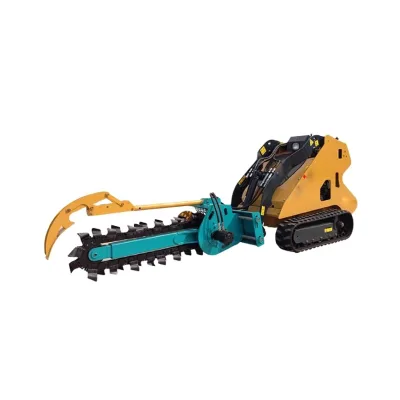
Procuring a front discharge skid steer ditcher requires careful alignment of hydraulic power, digging depth, and discharge mechanics. Buyers must evaluate whether the machine’s working flow and pressure match their existing skid steer loaders or if the unit is a self-contained small loader. The observed market includes models with hydraulic power ratings and specific working pressures, such as 15-21MPa, which dictate compatibility with various host machines. Understanding these hydraulic constraints is the first step in ensuring operational efficiency and preventing equipment damage during trenching operations.
The physical dimensions and weight of the unit are critical for transport and site maneuverability. Observed specifications indicate overall dimensions around 19501350720mm and weights near 540kg, which influence logistics costs and site access. Buyers should verify if the machine features a wheeled walking mode or is designed for attachment to a skid steer frame. The choice between a dedicated small loader and an attachment impacts the initial investment and the versatility of the equipment for different construction tasks, from utility installation to landscaping.
Product Scope and Observed Listing Signals
The current market listings reveal a diverse range of front discharge skid steer ditchers, with prices spanning from approximately $30 to over $16,800 USD. This wide variance suggests differences in build quality, engine type, and included features. Buyers should note that lower-priced items may be basic attachments, while higher-priced units could be complete small loaders with integrated engines and cabins. The minimum order quantity (MOQ) typically ranges from 1 to 3 units, indicating that suppliers are open to single-unit purchases for testing or small-scale projects, which is beneficial for procurement flexibility.
Observed product models include identifiers like S405, TK480, and mini-1, each potentially representing different digging capacities or chassis designs. Some listings specify a working width of 150-250mm and digging depths of 600-1200mm, catering to various trenching needs. The presence of customization options allows buyers to tailor the machine to specific site requirements. It is essential to cross-reference these model numbers with detailed technical sheets to ensure the observed signals match the actual performance capabilities required for your specific project scope.
Technical Specifications to Verify
Hydraulic compatibility is the most critical technical factor for skid steer attachments. Buyers must verify the machine’s working flow, observed in some listings as 80-110L/Min, and working pressure, noted as 15-21MPa, against their host loader’s hydraulic system. Mismatches here can lead to insufficient power or system damage. For self-contained small loaders, the engine type, such as Runtong R740 or similar, and rated power, around 15kw or 17.1kw for gasoline variants, must be confirmed. These specifications determine the machine’s autonomy and performance in demanding trenching conditions.
Physical dimensions and digging capabilities must align with site constraints. The overall width, observed at 1160mm for some models, and ground clearance of 118mm affect maneuverability in tight spaces. Digging depth standards, such as 24'', 36'', or 48'', should be verified against the required trench depth. Additionally, the maximum lifting force of 450kN and rated load of 1-3t for loader variants indicate their capacity to handle heavy buckets or additional attachments. Buyers should request detailed dimension drawings to ensure the machine fits within their operational envelope and can achieve the necessary digging depth without obstruction.
Compliance and Safety Documentation
Certification status is a primary indicator of manufacturing quality and regulatory compliance. Listings frequently mention ISO9001, CE, RoHS, ISO, and TUV certifications, which suggest adherence to international quality and safety standards. Buyers should request valid certification documents to verify that the manufacturer has undergone rigorous auditing processes. These certifications are particularly important for machines intended for use in regulated markets, ensuring that the equipment meets local safety and environmental requirements.
Safety features and operational documentation are equally vital. The front discharge mechanism must be designed to prevent material ejection towards the operator. Buyers should verify the presence of safety guards, emergency stop functions, and clear operational manuals. For self-contained loaders, the engine type and emission standards, such as RoHS compliance, are crucial for environmental adherence. Ensuring that all safety components are certified and that the machine includes comprehensive maintenance guides reduces operational risks and facilitates smoother integration into existing safety protocols.
Cost Drivers and Commercial Terms
The price range of $30 to $16,827.45 USD reflects significant variations in product complexity and included features. Basic hydraulic attachments are priced lower, while complete small loaders with engines, cabins, and advanced hydraulic systems command higher prices. Buyers should analyze the cost breakdown to understand what is included, such as the engine brand, bucket type, and hydraulic hoses. The observed MOQ of 1-3 units suggests that bulk discounts may be available for larger orders, which can significantly reduce the per-unit cost for large-scale projects.
Shipping and packaging costs are influenced by the machine’s weight and dimensions. Observed packing methods include iron frames and wooden packages, which protect the equipment during transit but add to the overall cost. The weight of 540kg for some models impacts freight charges, especially for international shipments. Buyers should clarify whether the quoted price includes delivery to their site or if it is an ex-works price. Understanding these commercial terms helps in budgeting accurately and avoiding unexpected expenses related to logistics and handling.
Supplier Qualification and Quality Control
Supplier origin, primarily China and Shandong, indicates a concentration of manufacturing hubs for this equipment. Buyers should verify the supplier’s production capacity and quality control processes. The presence of ISO9001 certification suggests a structured quality management system, but buyers should also inquire about specific testing procedures for hydraulic systems and structural integrity. Requesting factory audit reports or third-party inspection results can provide additional assurance of the supplier’s reliability and consistency in manufacturing.
Customization availability is a key differentiator among suppliers. Buyers should assess the supplier’s ability to modify dimensions, hydraulic specifications, or engine types to meet specific requirements. Clear communication regarding customization options and lead times is essential to avoid delays. Additionally, buyers should verify the supplier’s after-sales support, including warranty terms and availability of spare parts. A reliable supplier will offer comprehensive support to ensure the machine’s long-term performance and minimize downtime during critical project phases.
Long-Term Procurement Checks
Maintenance and spare parts availability are critical for the long-term viability of the equipment. Buyers should verify the accessibility of hydraulic components, engine parts, and wear items like digging teeth. The observed engine types, such as Runtong or Kepu, should have a established supply chain for replacements. Ensuring that spare parts are readily available reduces downtime and extends the machine’s operational life. Buyers should also consider the ease of maintenance, including access points for oil changes and filter replacements.
Performance monitoring and feedback loops are essential for continuous improvement. Buyers should establish metrics for digging efficiency, hydraulic pressure stability, and fuel consumption to evaluate the machine’s performance over time. Regular inspections and preventive maintenance schedules should be implemented to identify potential issues early. By maintaining detailed records of machine performance and maintenance activities, buyers can make informed decisions about future procurement and optimize their fleet management strategies for maximum efficiency and cost-effectiveness.
FAQs
What is the working pressure range for this hydraulic motor?
The working pressure range is 15 to 21 MPa for this hydraulic motor unit. This specification ensures reliable operation under standard industrial conditions while maintaining safety margins for heavy-duty digging applications in various soil types.
Which certifications are available for the new condition products?
Available certifications include ISO9001, CE, RoHS, ISO, and TUV for these new condition products. These standards verify quality management systems and safety compliance, ensuring the machinery meets international regulatory requirements for export and domestic use.
How much does the machine weigh and what is its model?
The machine weighs 540 kg and is identified by model numbers such as S405 or mini-1. This weight provides stability during operation while remaining compact enough for maneuverability in tight construction sites or agricultural fields requiring precise digging.
Can the product be customized and what is the packing type?
Customization is available for this product to meet specific buyer requirements. The standard packing options include an iron frame or a wooden package, ensuring safe transport and protection of the machinery during international shipping and handling processes.
What is the maximum digging depth and working width?
The maximum digging depth ranges from 600 to 1200 mm with a working width of 150 to 250 mm. These dimensions allow for versatile excavation tasks, accommodating different trenching needs while maintaining efficiency in various ground conditions.
Which engine types are used in the small loader models?
Engine types include Runtong R740, Bailitong, or Kepu for the small loader models. These engines provide a rated power of 15 kW or 17.1 kW, ensuring sufficient power output for lifting and loading operations in demanding environments.